


How I grew Wylo from

paying communities
Six months after launch,
growth was flat.
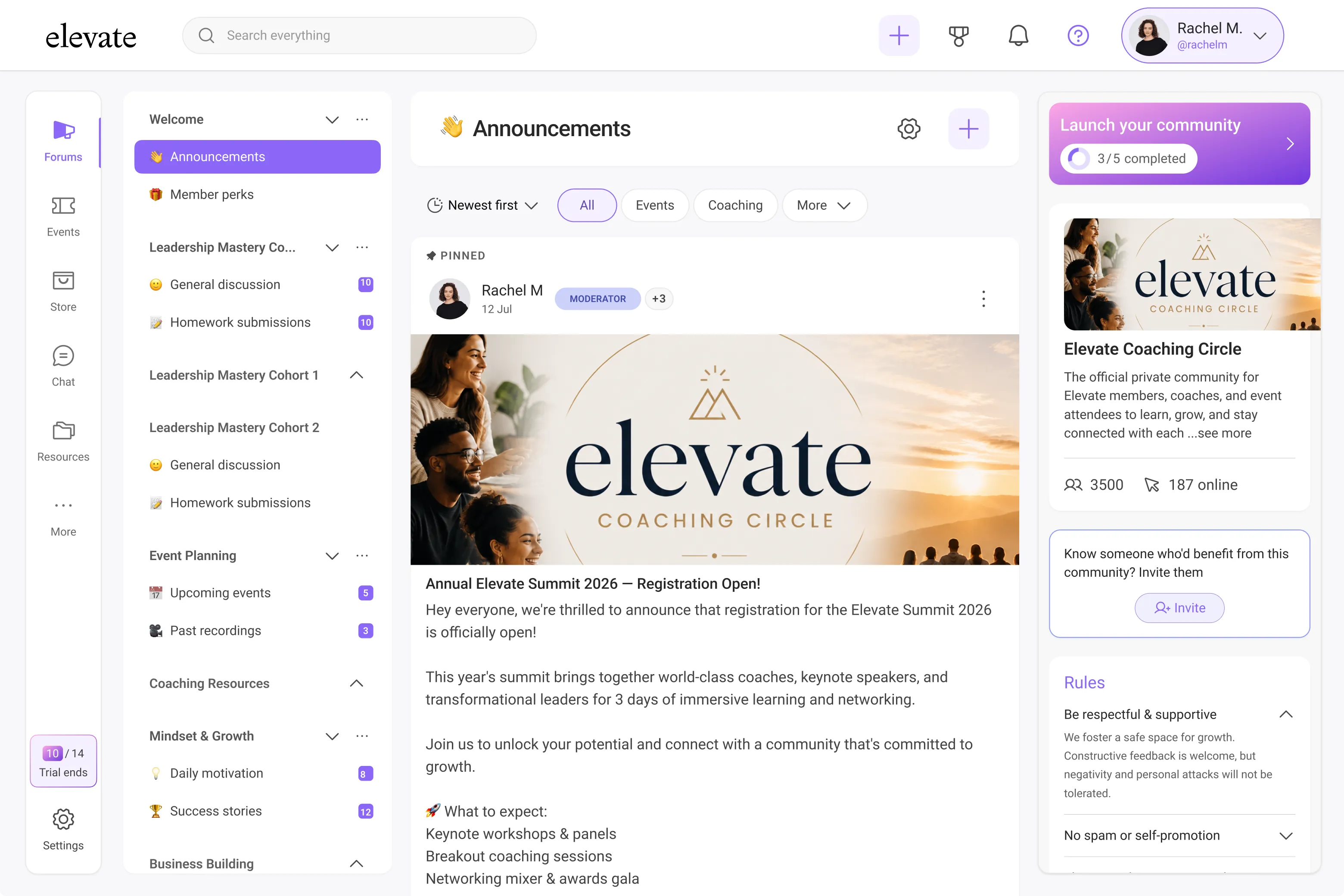
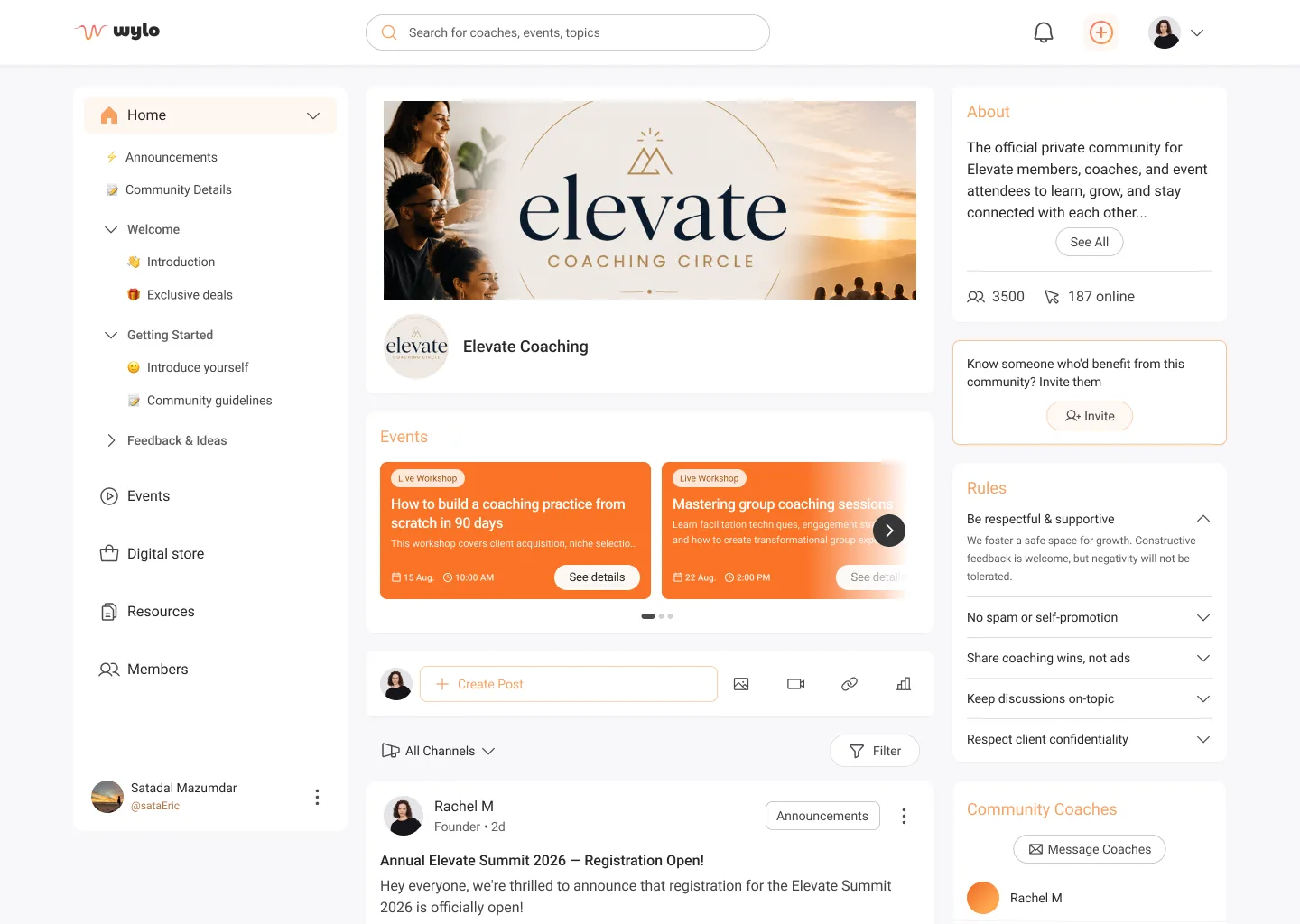
Wylo shipped as a forum-first SaaS: buy it, run your own branded community with forums, events, courses, a store, chats and memberships.
Trials were coming in. Few converted. Growth was flat, and the runway was not.
Paying communities
(Aug 2023 launch, figure at the 6-month mark)
Trial to paid conversations.
Accounts were created. Conversions were not.
Before touching a single screen, I needed to know
why anyone buys community software at all.
I went to the clients first &
conversations changed the question.
Before touching solutions, I interviewed our 8 paying clients and active prospects. I did not ask which feature they wanted next. I asked what business they were trying to run.
“Courses are the business.”
The community existed to retain students and support paid learning.
“We stitch tools together.”
Events, payments and conversations lived across separate products.
“It has to feel like us.”
A generic forum could not carry the brand experience they wanted.
“I don’t need everything.”
They wanted a small stack today with room to expand later.
Nobody was buying “a community.”
They were each buying a different business outcome.
Three patterns kept
repeating across the calls
I was not asking what to build next. I was asking why anyone buys a community tool at all: what pushes a business to go looking. Three answers kept coming back across the 8 client interviews and prospect calls.
They pay for multiple tools
Many clients were paying for several tools at once: one for events, one for courses, one for chat. They came looking to collapse the stack.
They want to stand out
Every tool looks the same, and they were selling a premium, close-knit space that had to feel like theirs. Standing out was a reason to buy.
They want to start small
Communities used only 2 to 3 features, never the whole product. They were paying for a full suite to run one corner.
Source: client and prospect interviews, launch period 2023. Usage pattern later confirmed by platform data.
Different businesses.
The same product shape.
The category treated the forum as the product and everything else as an add-on. Wylo did too. That forced radically different businesses into nearly identical structures.
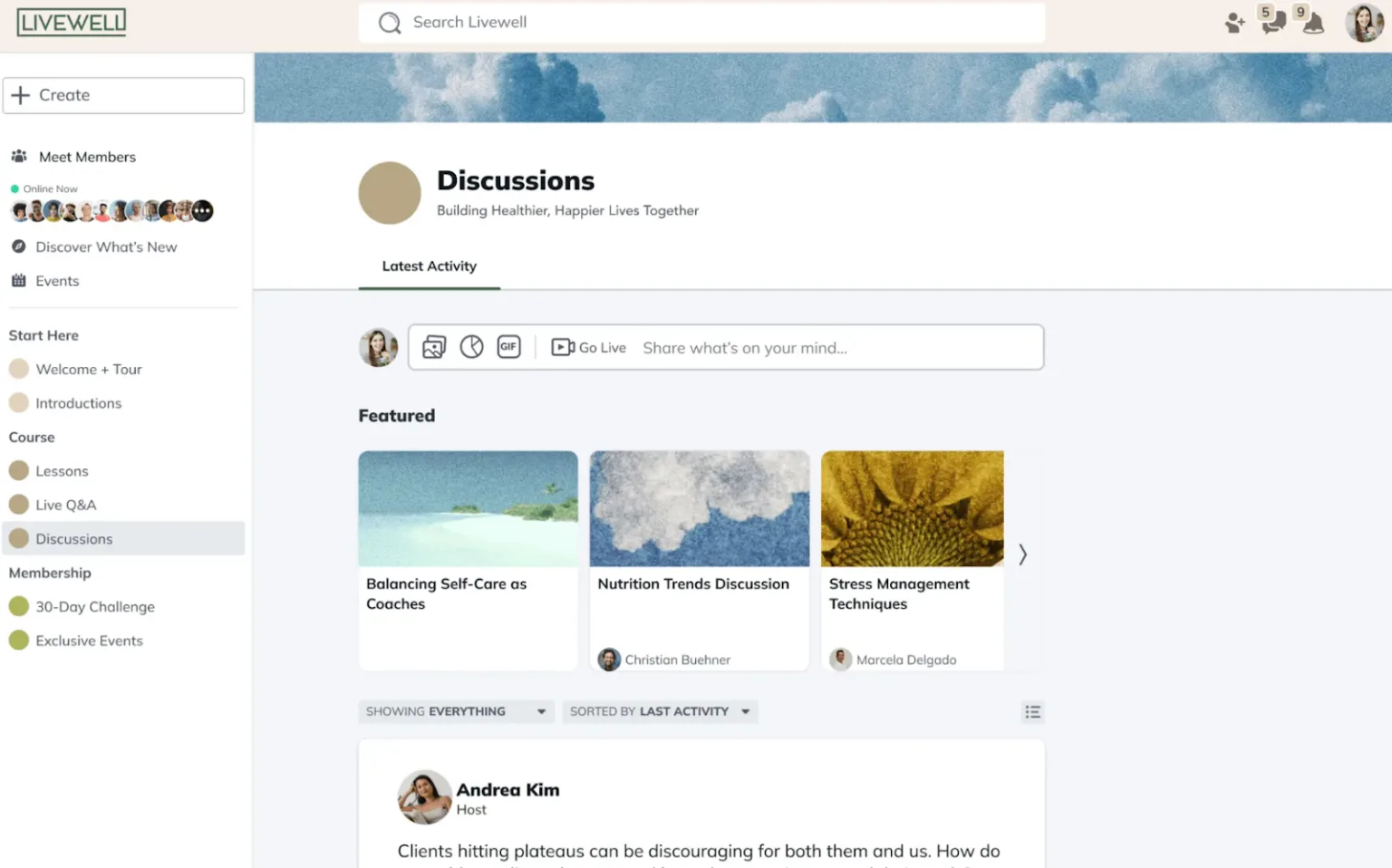
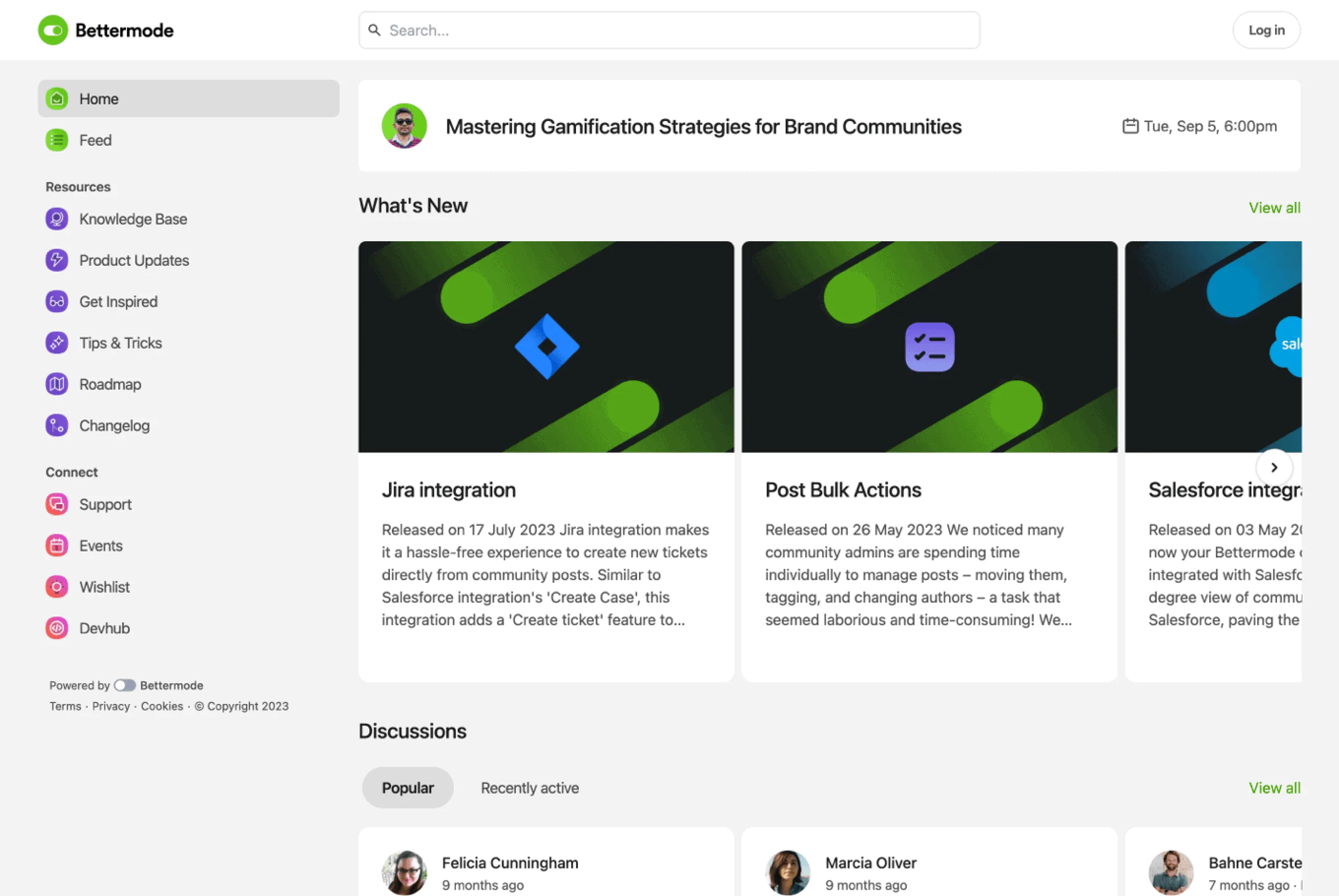
What the category assumed
Forum first. Every customer adapts their business to the software.
What the research suggested
The software should bend around each customer's business.
We were selling a feature as if it were the product
Every finding pointed the same way: a forum is one feature, but each buyer needed a different product built around their business.

I had watched paying clients bend their business to fit us.
Stop building one product.
Build a platform.
Three directions were on the table. The real answer sat one level up: a platform where any feature can lead, and every client assembles the exact product their business needs.

I took it to the CEO.
He said no.
Not because he disliked the idea. Because of what it committed us to. Modularity is a one-way door. Every feature we build after it has to be built modular too, and there is no version of that we can quietly walk back later.
Risk 01 · permanence
No route back
Once the platform is modular, every future feature inherits that architecture. The decision outlives the people making it.
Risk 02 · cost
Three engineers
This was not a redesign. It was a rebuild of how the product is assembled, priced and sold.
Risk 03 · evidence
A need, not a number
Eight interviews showed that customers wanted a different shape. They did not show what that shape was worth.
Here
Argue harder
(a louder opinion)
Go back with a plan
I took this one
He was not wrong. I had a conviction.
I did not yet have a plan.

So I went back out.
With a bigger question.
Round one asked
Is modularity the right architecture? A design question.
Round two asked
What is actually capping growth, and what would move it? A business question.
I started asking why growth had stalled.
Round two came back with
three constraints. Not one.
45 conversations: existing clients, prospects who stalled, and usability sessions.
Source: second research round, late 2023 · competitor coverage checked market by market
Three ceilings. Three developers and one designer.
We could not build three.
So the real decision was order.
I brought the three constraints back with the patterns and quotes underneath. The whole team talked it through and agreed: the question was order.
The no did not become a yes because I argued better.
It became a yes once there was a sequence attached to it.
Move one of three · implementation
Modularity
The forum
stopped being
the product.
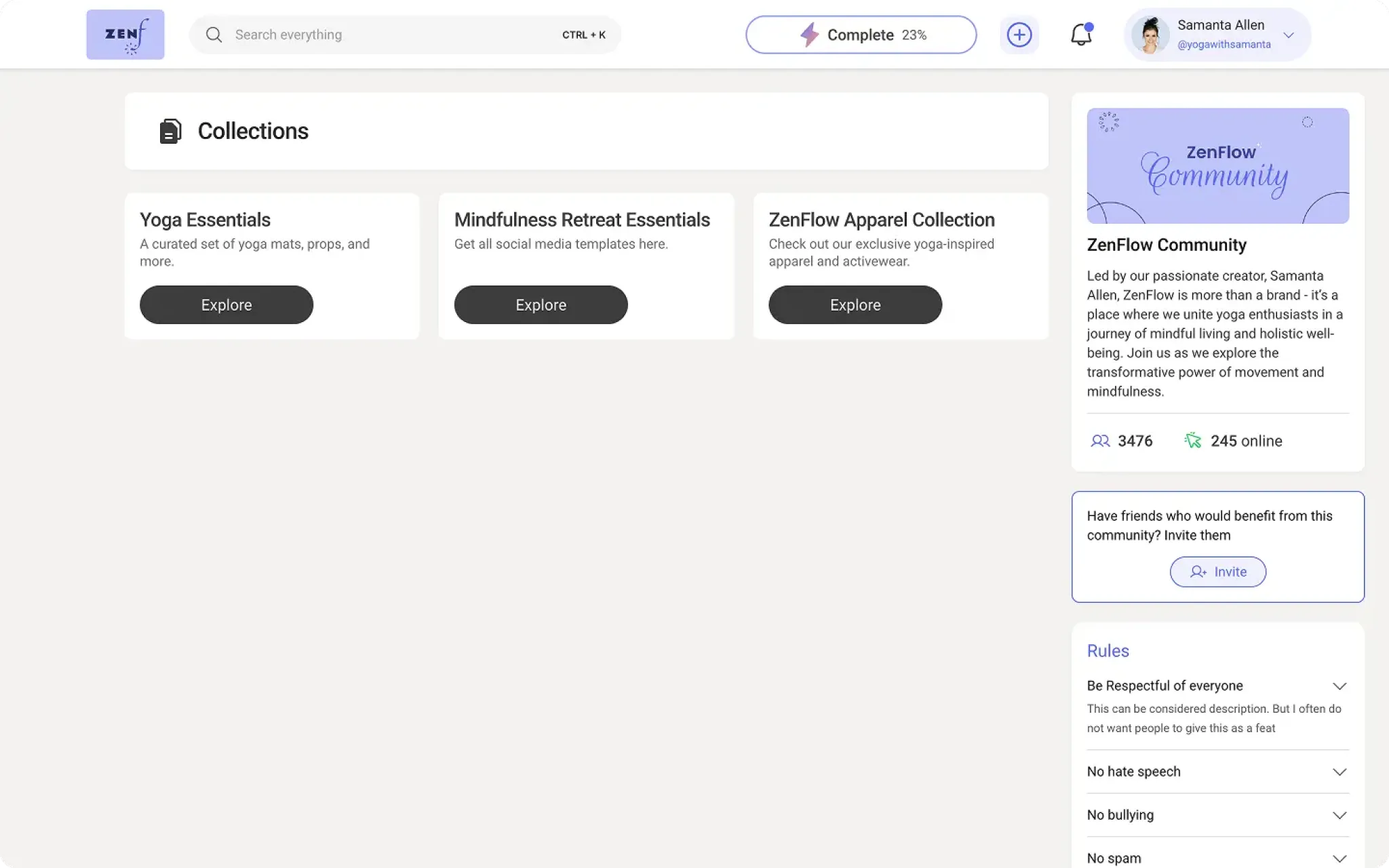
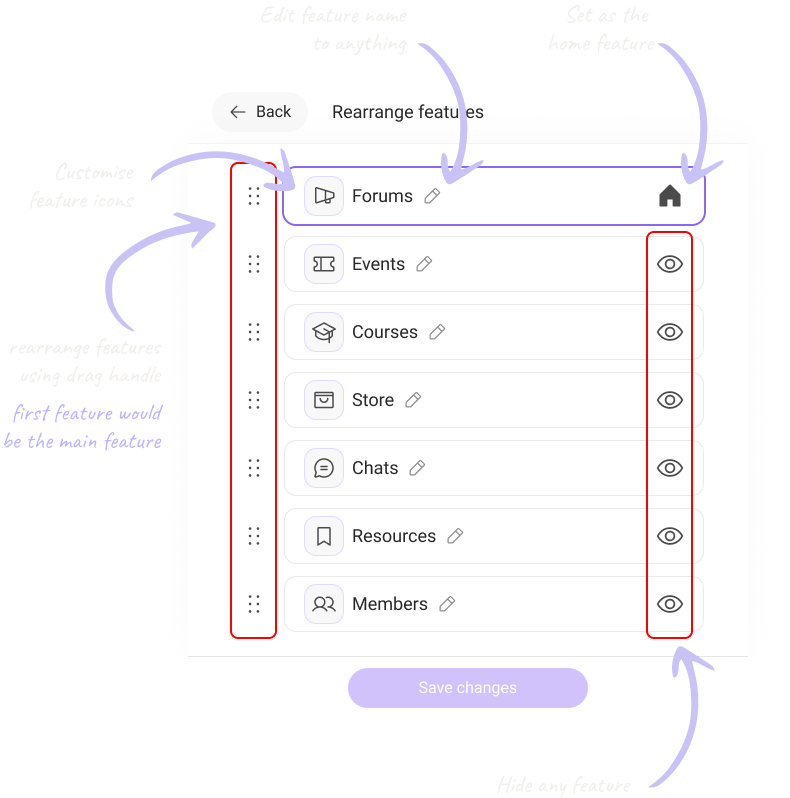
Any module could now lead. Courses lead for an educator, events lead for an organizer, forums still lead for a brand community. A client could open with two modules and grow into six.

You can switch between different features using the side-nav, try it
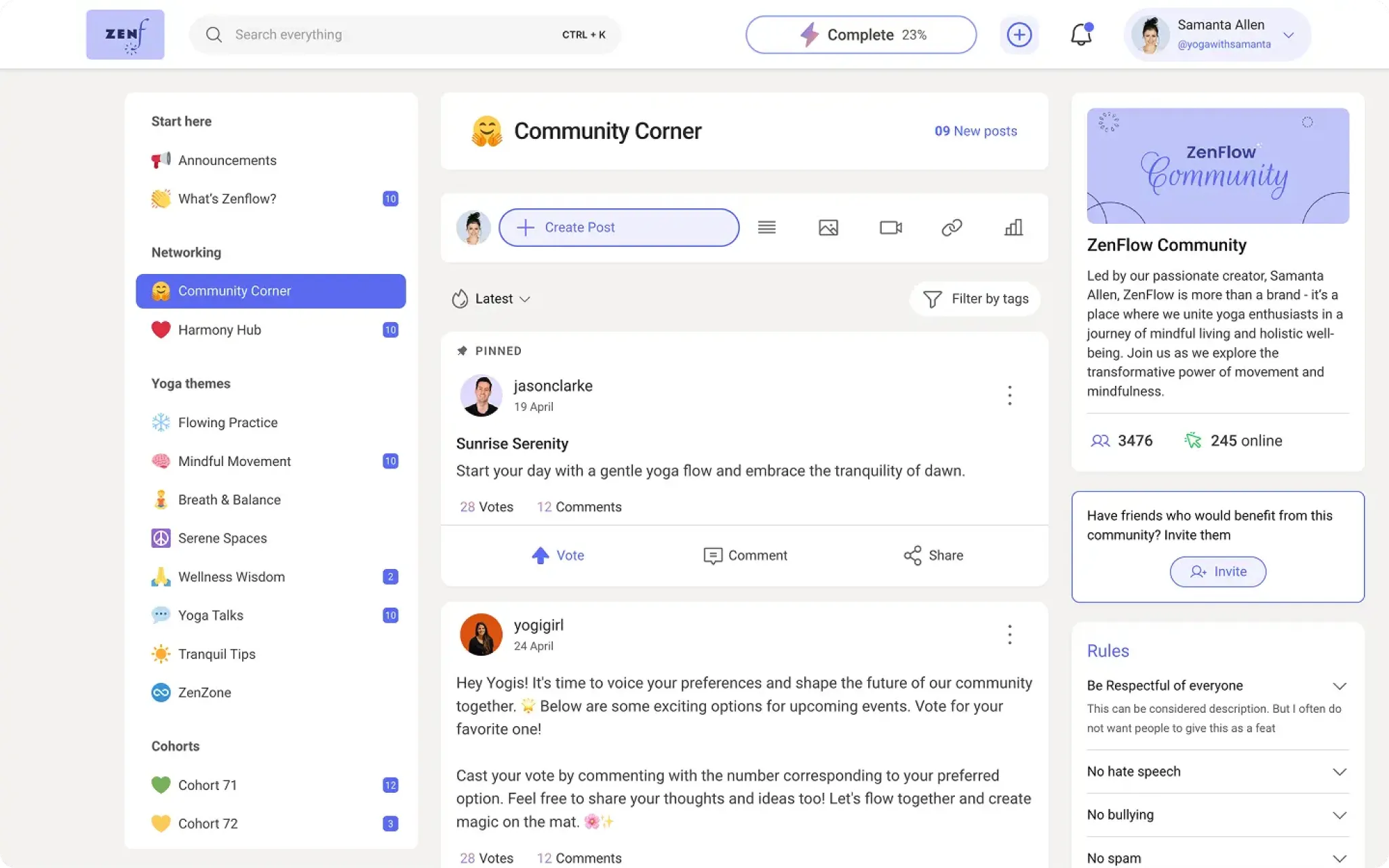
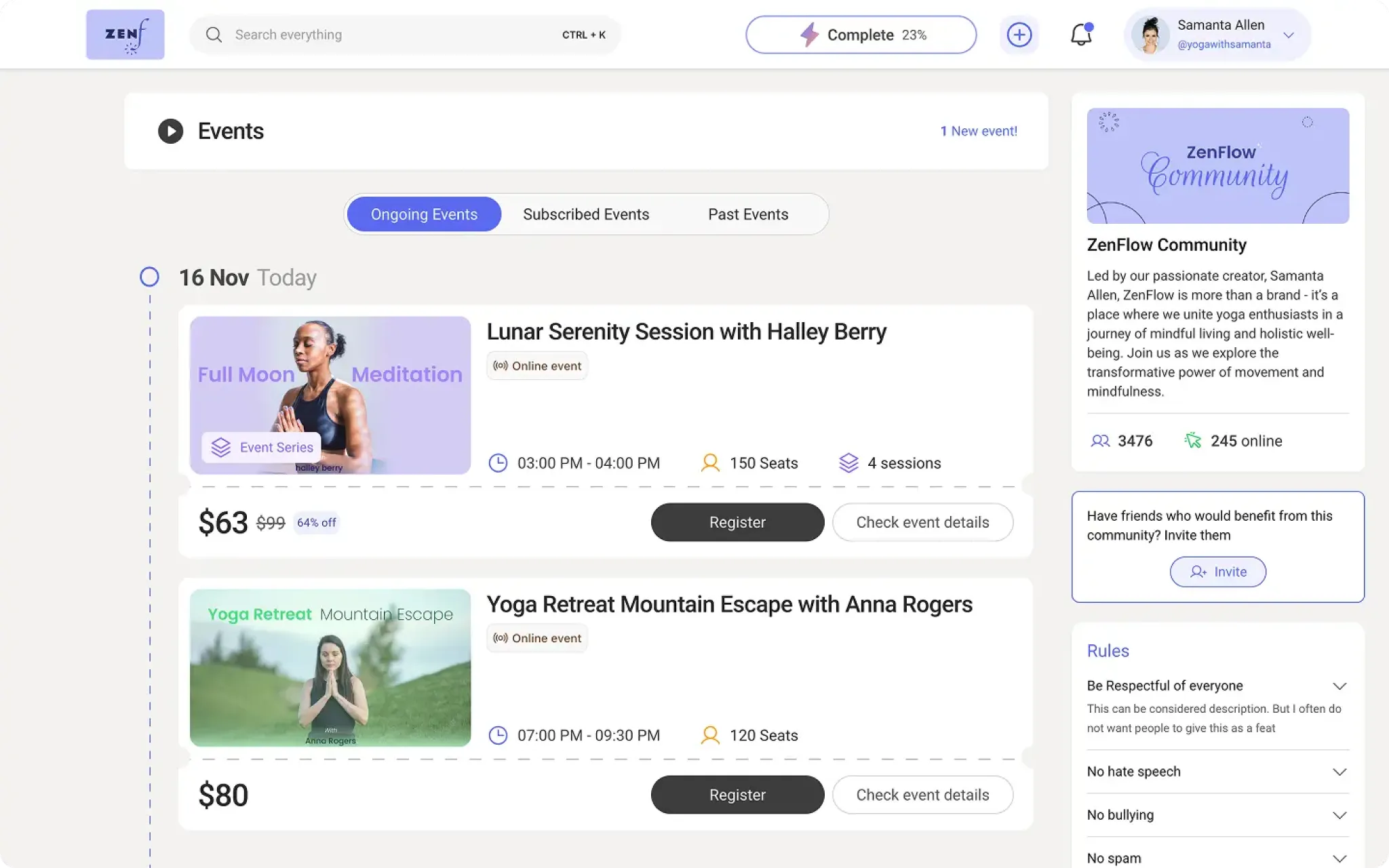
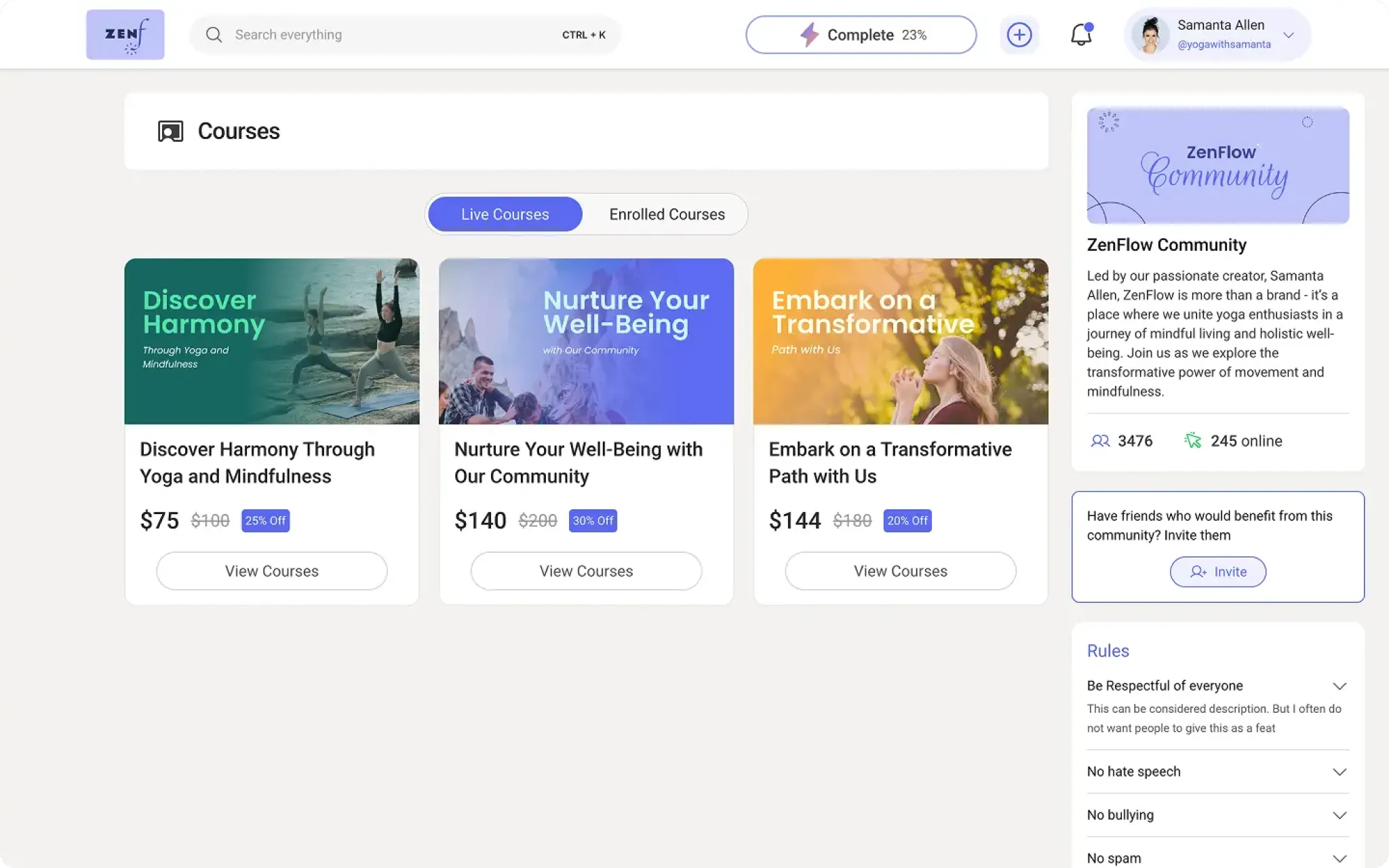
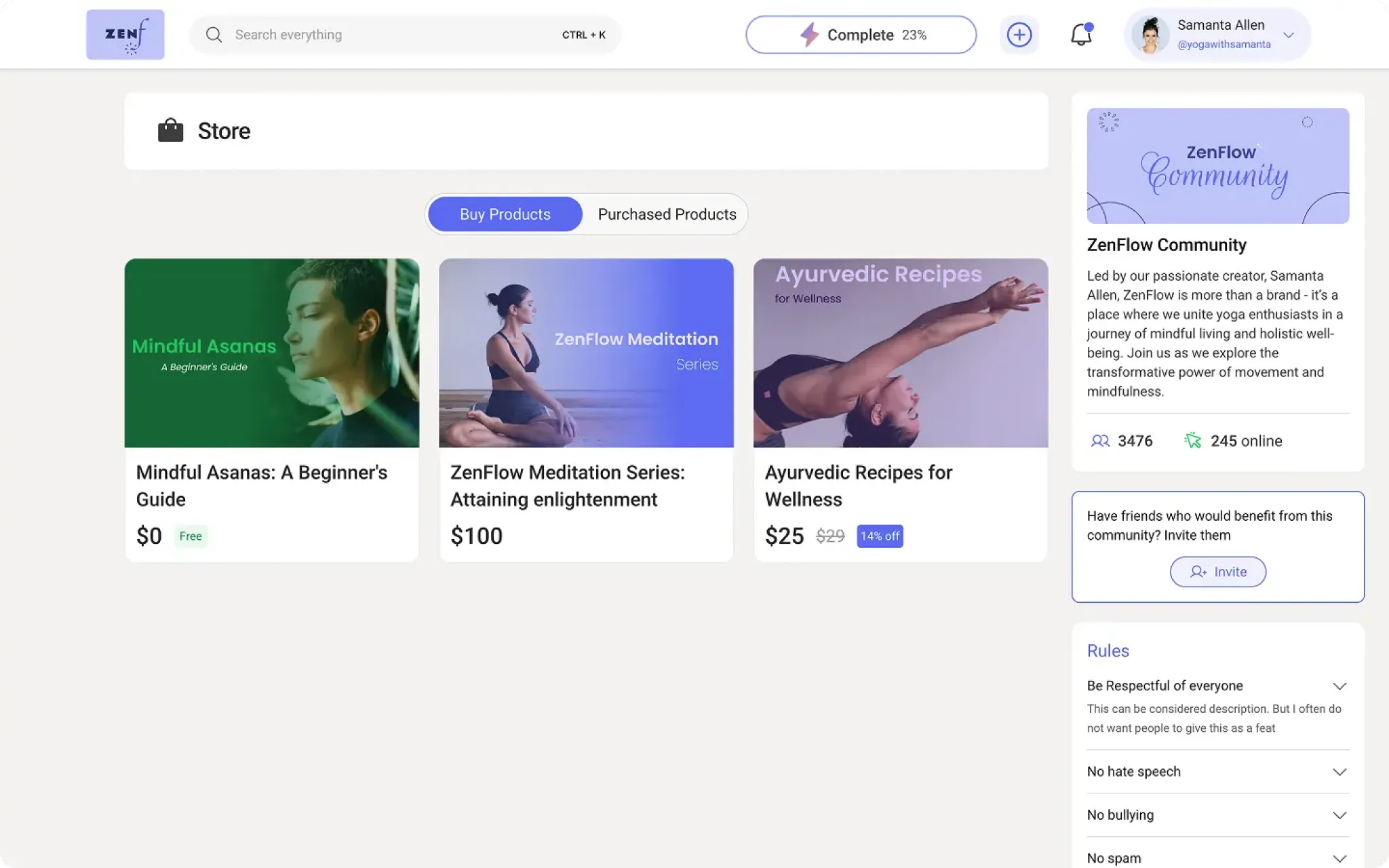
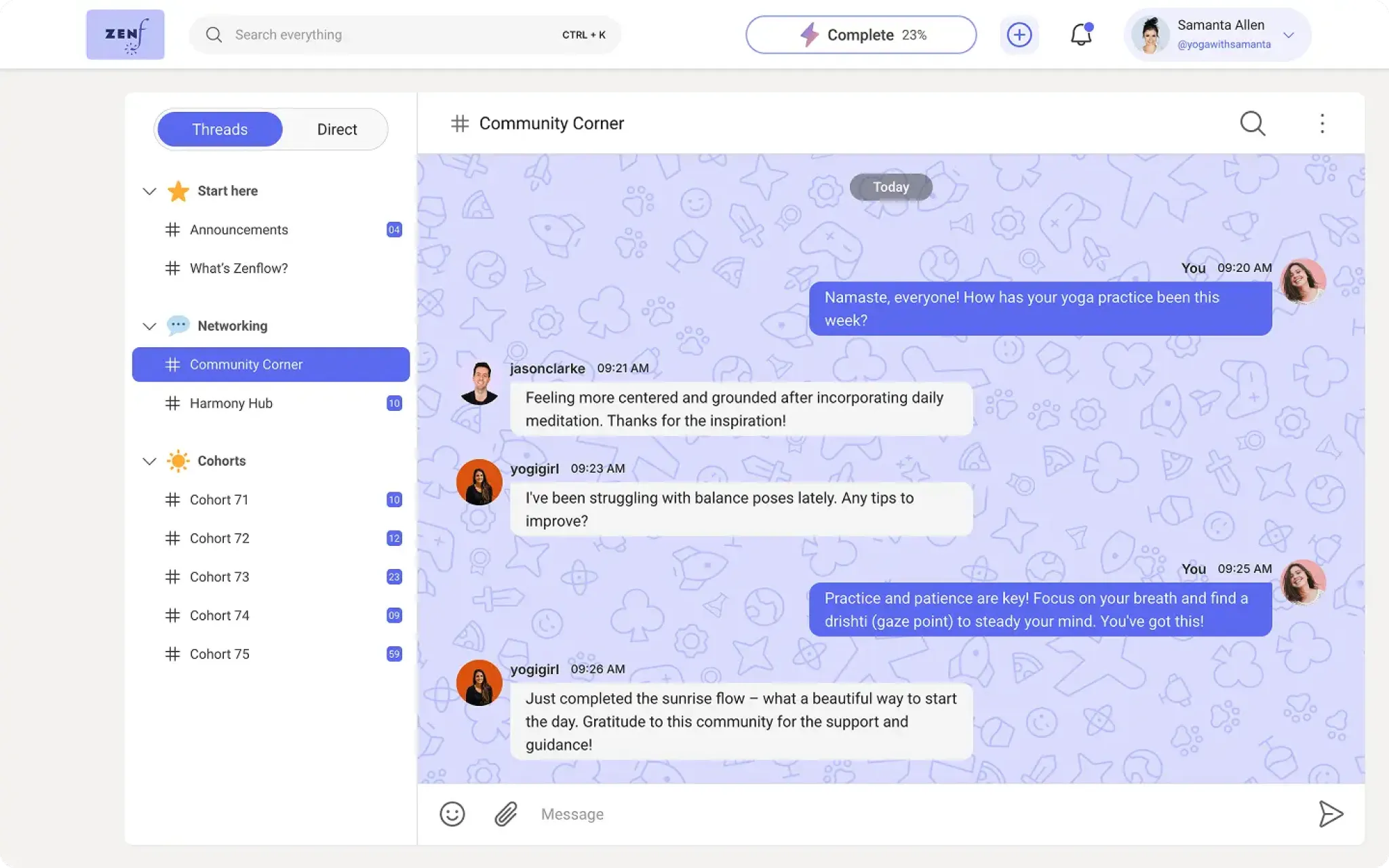
Educator
Organizer
the lead module becomes the identity of the product
The pricing advantage
came built in.
Once the product is assembled from parts, it can be sold in parts. $10 per module, $50 for all six, and a realistic $20 entry point. Nobody selling a fixed forum could match that without rebuilding what we had just rebuilt.
Build a plan — click the modules
start at $20, grow the bill only as the business grows
Start smaller
Activate only what matters now instead of configuring a whole suite.
Lead differently
The first surface reflects the actual business.
Pay by module
A realistic $20 plan instead of forcing the entire stack.
Grow naturally
More modules become a built-in upgrade path.
One product decision moved the
whole business model.
It shipped at the end of December 2023 with a public launch behind it, and the calls changed character almost immediately: prospects arrived describing their business rather than asking whether we had a particular feature.
10
~1,200
Aug 2023 · six months in
By Aug 2024
Dec 2023
modularity ships
1 · MODULARITY
Move two of three · implementation
Multilingual
Constraint two was language.
Now it was worth solving.
We could fit any business. We could still only sell to people who ran that business in English — the ceiling we had agreed to take next, sitting there untouched.
English only (India, the US, everywhere we reached) Our own presence was English-speaking wherever it was. The whole category sold into one language, and so did we.
Southeast Asia · South America · much of Europe Where our own clients were asking from. One regional option, or none at all.
Our own clients were already asking for it.
What if going local is what makes us global?
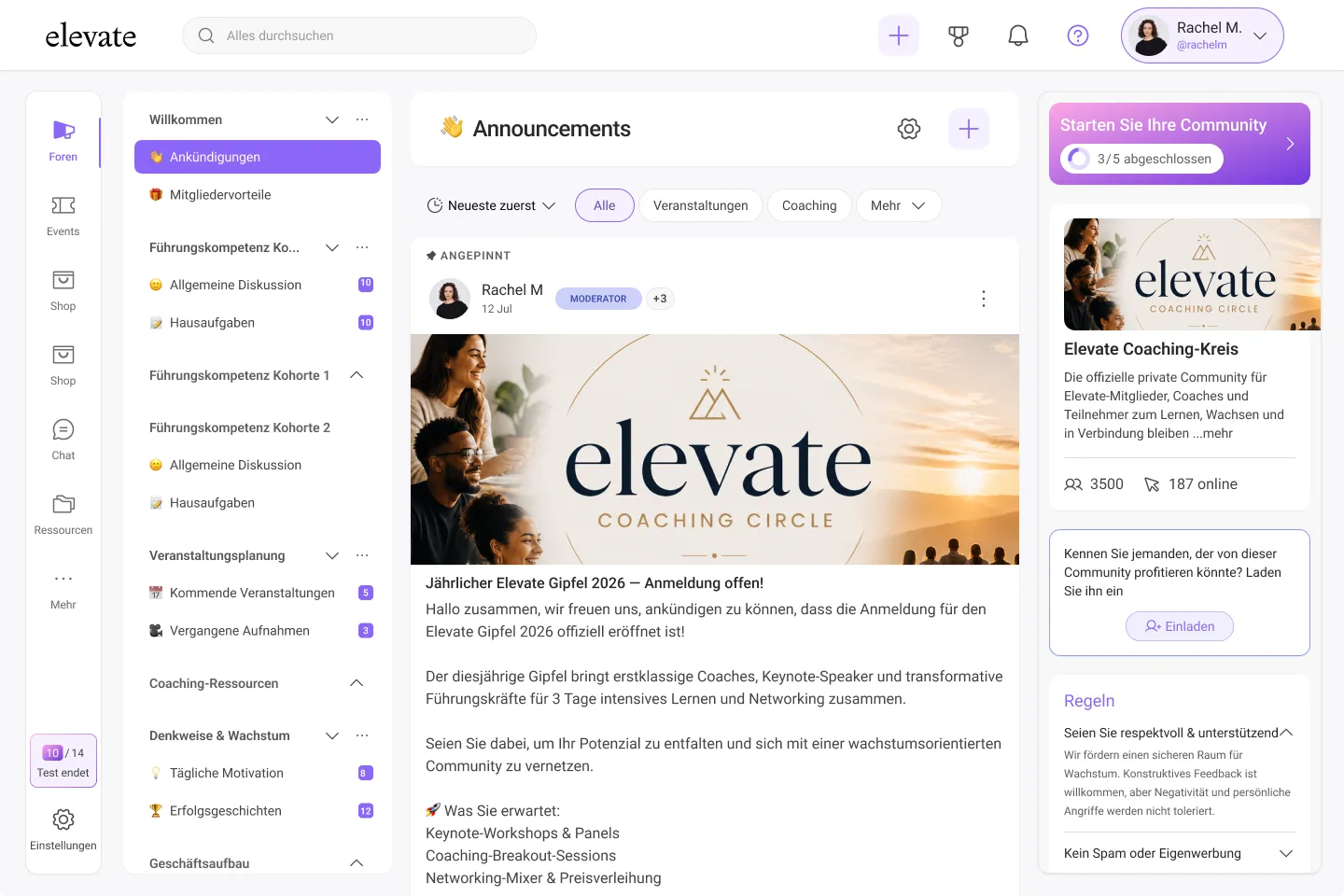
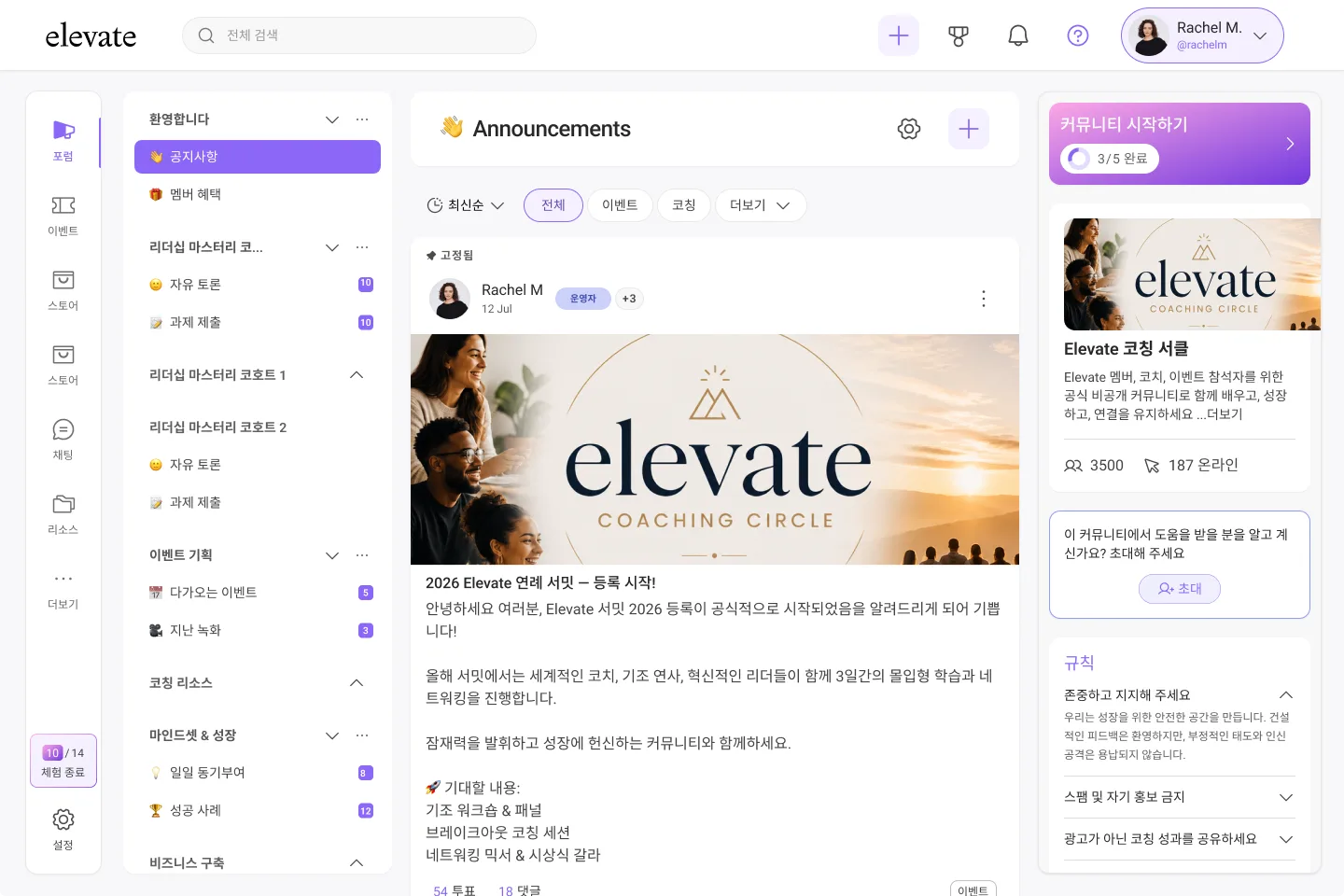
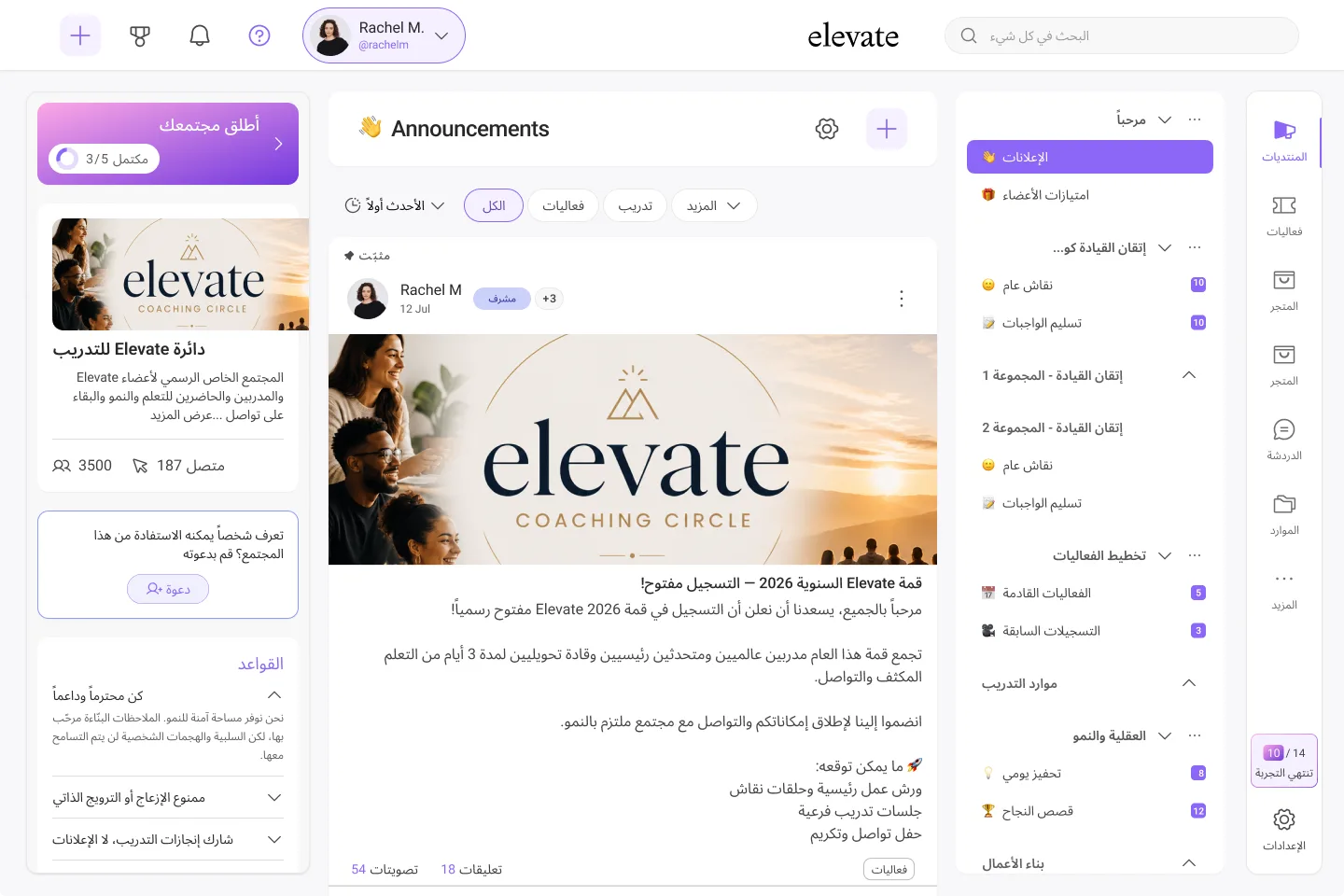
From localization
to globalization.
Language went into the product system: text expansion, right-to-left, AI translation. Modularity paid for it: a language lands once.
10communities
Aug 2023 · Before modularity
~1,200communities
Aug 2024 · After modularity
Dec 2023
Modularity ships
Sep 2024
Multilingual ships
2,000+communities
Jul 2025 · After multilingual
Move three of three · implementation
AI onboarding
They could not picture the thing
they were deciding to buy.
Two ceilings gone. I went back to people inside the free trial, expecting to hear that onboarding had too many steps. That was not the complaint.
“I can’t visualise what my community should look like. How am I supposed to sell it to my members?”
Trial user, repeated almost word for word
Day zero
nothing on the screen yet
1 to 2 weeks of setup before it looks like anything
A community worth showing
what they were deciding about
and they decide right here
Several asked whether they would need to hire a second person to run it. The effort was the objection, not the price.
The problem was never
too many steps.
It was an empty Day Zero.
Templates came first. They were not
personal enough, so we pivoted to AI.
We built a template gallery first. It moved the work rather than removing it — you still had to picture the gap. So we let the product read the business and generate the community.
10communities
Aug 2023 · Before modularity
Dec 2023
Modularity ships
~1,200communities
Aug 2024 · After modularity
Sep 2024
Multilingual ships
2,000+communities
Jul 2025 · After multilingual
Aug 2025
AI onboarding ships
3,000+communities
Jul 2026 · After AI onboarding
Trial to paid conversion
25%
before
40%
after AI onboarding · Aug 2025
Three ceilings. Three moves.
In the only order that would have worked.
Nothing was ever switched off. Each move shipped onto the stack already running, so every number below belongs to the whole stack, not to the newest layer.
Aug 2023 · 10 communities Jul 2026 · today
Modularity Dec 2023
~1,200with modularity live
+ Multilingual Sep 2024
2,000+with both live
+ AI onboarding Aug 2025
3,000+with all three live
My work across all three: the research rounds, the order we shipped in,
and the design that shipped.
Plenty is abstracted here — this is the short version. For the detail behind any of it:
satadal963@gmail.com
The biggest lessons were not about screens.
The work I am most proud of was not making Wylo look better.
It was helping change what Wylo could become.
Thank you
This deck is a brief abstraction of three years of work — three moves, a lot of research, and plenty left out. Happy to go deeper on any of it.
For anything you want to dig into
satadal963@gmail.comSatadal Mazumdar · Product Designer